
Current Events
Roslyn, Long Island, NY: The Enron of Education Fraud and Corruption.
Roslyn, Long Island will, we hope, put the fear of the unknown in every Superintendent's heart in any school district. and will be, in the future, the model for advocating reform in educational policy-making, budgetary transparency and personnel accountability.
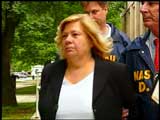
By Betsy Combier
In the future we hope the public will be able to understand what happened in Roslyn's School District and see that this corruption can, and does, happen throughout the nation. To further this campaign we need the help of the media, who, to this day, does not give education activists and advocates a chance. We are not published on the op-ed pages of our local and national newspapers, and some of us have been told by reporters "my hands are tied, my publisher will not 'allow' me to print anything about this...you...your efforts...etc." What 'they' don't understand is that, through the internet listservs, blogs, and email chat rooms, America is abuzz with information. A few minutes after a Principal/school administrator says or does something inappropriate to a child or parent, this parent can tell millions of other people who are members of listservs.
We need to encourage the gathering of accurate information on federal, state, and city funds used for school-based services and resources, and we need to protect whistleblowers who ask the right questions at the right time. Parents who find out about corruption are not protected, and they know this. We hope that the story of Ms Gluckin and all of her "friends" will be, in the future, the model for advocating reform in educational policy-making, budgetary transparency and personnel accountability not just at the administrative level but throughout school districts nationwide, including the building contractors, 'consultants', and panel members hired for outrageous sums.
It's time for change, and it's time for accountability and integrity in education.
$1M STUDY HAUL
By KIERAN CROWLEY, NY POST, July 7, 2004
July 7, 2004 -- The disgraced former head of the scandal-wracked Roslyn School District was busted yesterday for living it up at the expense of Long Island taxpayers - allegedly filching more than $1 million in plane tickets, tropical cruises, skin treatments and jewelry.
Ex-superintendent Frank Tassone, 57, was busted a month after similar charges were filed against Pamela Gluckin, a former assistant superintendent accused of ripping off more than $1 million from a school district with a reputation as one of the nation's brainiest.
Gluckin allegedly used district funds to make payments on several luxury homes and is free on $25,000 bail, while Tassone is similarly accused of cooking the books so he could live the high life.
Prosecutors said their investigation into the ever-widening scandal could bring down as many as 20 others, and officials said as much as $8 million may have vanished, some of it during Las Vegas and Caribbean spending sprees.
School officials said Tassone's roommate, Stephen Signorelli - with whom he lives on the Upper East Side - may have billed as much as $800,000 to the district through his desktop publishing company. Repeated attempts to reach Signorelli by telephone were unanswered. He has not been charged.
"This is a huge scandal," said Nassau County District Attorney Denis Dillon.
Neighborhood activists said Tassone and his alleged cohorts may have siphoned off as much as $15 million over the past few years, with millions going for luxury homes, cars, dry-cleaning bills, gourmet meals - and mountains of dog food for their pets.
Dillon said first-degree grand-larceny charges filed against Tassone covered a two-year period between 2000 and 2002 - and could be the tip of the iceberg. The former administrator faces up to 25 years in prison if convicted.
His lawyer, John Kase, said Tassone was innocent and called investigators "just way off base."
Investigators say incriminating records may have been shredded, including a paper trail showing $33,000 in dry-cleaning bills for Tassone alone. Prosecutors said Tassone and his crew of big spenders went on cruises, bought property in Las Vegas and the Caribbean, and even used school funds to pay off gambling debts.
Residents said they were furious that they had been conned.
"Disgusting," said Harbor Hill PTA member Amy Katz. "I don't know how these people sleep at night. I'm outraged that they'd steal money from kids."
Another Roslyn resident, who did not want to be identified, said she wanted Tassone to "fry."
"We're about ready for a public lynching," she said. "It's mind-boggling. They were even buying toilet paper and dog food with the school district's credit card. They went shopping, clear and simple. It's beyond chutzpah!"
Roslyn resident Cary Ratner was enraged.
"That money came out of my pocket," she said. "And now we've got these pigs slopping at the public trough. We're just not going to stand for it."
In Free-Spending Roslyn Schools, Missing Money Isn't Easy to Find
By KEVIN FLYNN
This article was reported by Kevin Flynn, Michelle O'Donnell and Stacy Albin and written by Mr. Flynn.
ROSLYN, N.Y. - Until this year, the worries that rippled through the affluent public school community here were largely enviable - such problems as which Ivy League colleges the high school seniors should consider.
In a district where 98 percent of the graduates go to college and only a fraction need financial aid, people did not fret much over school spending, even when the budget grew by nearly 40 percent over the past four years.
Their attention level soared several weeks ago when Pamela C. Gluckin, a senior administrator, was charged with stealing more than $1 million in school funds. Several days later, the superintendent, Frank A. Tassone, resigned after the school board discovered that a word processing company hired to do $800,000 worth of work was owned by his roommate.
Now, as school officials, state auditors and Nassau Country prosecutors pore through the district's bills, it has become apparent that not only were the district's financial safeguards woefully insufficient, but its spending on items like limousines and restaurants was often out of bounds.
Like those in school systems throughout the state, many of whom are watching Roslyn closely, the volunteer school board here is made up of busy people who placed their faith in a paid professional staff over which they had only limited day-to-day control. They also had internal auditors and external auditors, district treasurers and audit committees to help them watch the money. And as long as the college acceptances kept coming and the SAT scores stayed high, it appeared, from afar anyway, that taxpayers were getting exceptional value for their educational dollar.
But Ms. Gluckin, cloaked perhaps by the district's largess, was able to bypass the protections built into the system, according to the criminal charges, as she directed the district's finances from an office where she controlled both the machine that wrote new checks and the closet that stored the canceled ones. And many financial records are now missing, according to the district.
In recent days, the district has released records that detail how the system has spent its money since 1990, when Ms. Gluckin first began work as a bookkeeper. A review of those records and interviews with school officials and vendors indicate that, for a host of expenses, the tallies seemed to run high, the educational purpose was sometimes unclear and, in some cases, the listed vendors said they had never been paid what the system's books show.
Spending on limousines and car services topped $100,000 during the period. An additional $50,000 was paid to restaurants and more than $600,000 was spent in delicatessens and other specialty food stores.
Someone charged the district $21,000 to either lease or buy a BMW. Someone recorded that $736,000 had been paid to an education publishing company in Oklahoma, although the company says it has no record of doing business with the district. Someone took out a membership at an Equinox gym for $1,485 and reserved space with Manhattan Mini-Storage, far from Roslyn, at a cost of $3,800.
Board members say they are reviewing nearly $8 million in expenses, because the supporting documents do not exist or have disappeared. Among the missing records are the backup documents to support $33,000 that was paid to cover the superintendent's dry cleaning bills.
The records are in such disarray that it could take auditors some time to distinguish between the legitimate and questionable expenses, between the food delivered to the student cafeteria and that which might have ended up in an official's home. In some cases, the items are fairly routine, like the cars and gas credit cards that the district gave to its crucial staff members. But the Roslyn board says it never approved these items, and so the credit cards have been turned in. Two district supervisors who had the use of Jeeps have been told they can no longer drive them home at night.
"They were a big-spending district," said Andrew Miller, an accountant who served as the district's outside auditor for 14 years. Among the restaurants frequented in the past 13 years were Windows on the World at the World Trade Center, where $1,700 was spent, and Pearl East in Manhasset, which the district paid $13,000 to hold one or two staff parties each year, according to its owner, Cathy Huang.
Mr. Miller, who is the outside auditor for 56 school districts, said some districts charge employees to attend a staff party, whereas Roslyn often footed the bill. District officials, he said, also routinely sent flowers and baskets of fruit to families of people in town who had died. "It resembled corporate spending on public relations," he said. Mr. Miller's firm, Miller, Lilly & Pearce, was let go several weeks ago by the board, which says it should have been able to do more to spot the fraud, a contention he disputes.
Patricia Schissel, a board member for 19 years, said the board has long relied on its professional help, both from those on staff and outside consultants, to ensure that money was spent wisely. "We were always assured that things were corrected if there was anything minor that needed correction," she said.
In recent weeks, though, many people have lost patience with the board's explanations about what has befallen the district of 3,300 students. that has long been one of the highest achieving in the state. Several weeks ago, the school budget was voted down for the first time in more than two decades. Internet message boards and public meetings on the topic have been tense with accusations and rumors.
"I think they're banking on ignorance," Patti Werner, the parent of a high school senior, said of the board. "That's not an excuse. The community has to believe in them and the community doesn't."
Jill Studley, the president of the local parent-teacher association, said: "Everybody's so smart here and they're so educated. Look at what they pulled over our eyes."
Roslyn's predicament has resonated across Long Island and beyond. Other districts are reviewing their own practices and assuring school parents and taxpayers that their own safeguards would prevent what happened in Roslyn.
"The Roslyn situation is unique," said Dr. Ronald L. Friedman, the superintendent in Long Beach, also in Nassau County, "in that there appear to have been multiple larcenous people employed in high places who colluded to defeat the very tight safeguards with which we are all familiar and proud."
No one aside from Ms. Gluckin has been charged in the case, but the Nassau County district attorney's office has said that it is investigating the conduct of other school officials and members of Ms. Gluckin's family.
Prosecutors say Ms. Gluckin used the stolen school funds to help finance four homes, a Lexus and other luxury items. The district first discovered missing funds in 2002 but believed, based on an audit, according to board members, that only $250,000 had been taken, so they allowed Ms. Gluckin to resign, citing "personal and medical reasons" after she repaid the funds. In hindsight, board members acknowledge, the decision was a mistake.
More recently, the board has sued Ms. Gluckin in an attempt to recover additional money. In the suit, the district says it believes she funneled some of the money to herself by arranging for checks to be written to companies she had established.
One relative of Ms. Gluckin, a niece who had been an accounts payable clerk in her office for several years, was placed on administrative leave by the board earlier this month. The board president, William Costigan, said, "The board found that there were questionable payments made to her that needed to be investigated." In addition, the niece appears to have had the use of an E-ZPass paid for by the district to pay tolls on her daily commute, according to the acting superintendent, Charles Piemonte.
Since the furor over the missing money resurfaced several months ago, several vendors for the district have disputed the amounts carried for them on the district books. Michael Karopoulos, the owner of A Touch of Class Driving Services, said he did not charge the district anywhere near the $65,000 that is listed for his limousine and car service. He recalled that the district spent about $15,000 to ferry the high school's guidance director back and forth from New Jersey each day several years ago, when the director was recovering from an illness but was needed to manage the college admissions process. Aside from that, he said, he drove board officials and teachers to the airport, but he never came close to earning even $50,000 for those trips.
Long before the current scandal, Roslyn was known as a place that spared little expense to educate its children. Its per-pupil cost of $20,385 is one of the highest on Long Island, and Mr. Tassone had been one of the best-paid superintendents in the state, with a salary of $230,000. He had made only half that amount when he came to the district in 1992 with a goal, he said, to make the district "as cost-efficient as possible."
More recently, the district, in an effort to hold on to an administrator it viewed as multitalented, has at times augmented his salary with payments to offset the cost of his Manhattan rent, his Mercedes convertible and his treatment by a well-known diet doctor.
Going forward, district officials are embracing a more modest approach to spending, and the $78 million budget, to go before voters on July 13, represents just a 3 percent increase over last year. The district is also creating new safeguards, like the requirement that all checks carry two signatures.
The measures may be too late to appease some disgruntled residents, many of whom are urging that the entire school board be ousted. But even the most outspoken critics seem to agree that the changes cannot be allowed to undermine the excellence of the school system, which so long has been one of the community's signature achievements.
Lalaine Nassiri, the mother of three school-age girls, said the future concerns her. What programs might be eliminated, she asked last week as she ate a picnic lunch in a park with her two daughters. What new bit of distressing news waits around the corner?
"I'm afraid of what we don't know," Ms. Nassiri said.
BACKGROUND
Scandal jolts top Long Island district
Board found $8 million in suspicious spending
Cnn.com, Wednesday, June 16, 2004 Posted: 5:19 PM EDT (2119 GMT)
ROSLYN, New York (AP) -- This is an unlikely setting for a crisis in the public schools.
Roslyn High sends 95 percent of its graduates to college, its SAT scores are among the best in the nation, and it was cited in a recent Wall Street Journal story on the some of country's finest public schools. Foreign language is offered to youngsters beginning in kindergarten.
For more than two decades, voters in this well-to-do Long Island community less than 20 miles from Manhattan have faithfully supported a generous school budget, funding whatever programs administrators thought necessary to keep the district's 3,000 students at the head of the class.
Then came accusations this spring of theft and breathtaking avarice: school funds -- perhaps millions -- allegedly used to buy luxury homes, cars and other items, and tens of thousands of dollars in dry cleaning and gourmet food bills.
The scandal has led to the arrest of a former administrator and a voter revolt.
"Outraged," said longtime resident Carolyn Horowitz, who was in court when the one-time administrator was arraigned. "The word would be `outrage."'
The furor unfolded slowly. First there was an anonymous letter sent to the school board in February, alleging the former longtime administrator may have stolen much more than the $250,000 she repaid two years ago, when she was quietly permitted to retire. That led to an investigation by the district attorney's office and the indictment earlier this month of Pamela Gluckin, former assistant superintendent for business, on charges of stealing more than $1 million.
The school board now says it has found nearly $8 million in suspicious spending.
Luxurious living
Prosecutors say the money Gluckin took paid for mortgages on three homes, luxury automobiles and credit card debts.
"She stole from the programs of the children of the Roslyn School District and placed the school district into a great deal of turmoil," prosecutor Pete Mancuso said. "You're dealing with someone who stole in order to satisfy her own needs for luxury."
Her attorney said that she is innocent and that people will change their opinion of her once all the facts come out. Gluckin is free on $25,000 bail.
Gluckin's arrest, it turned out, was just the beginning.
The superintendent of schools, Frank Tassone, has announced his retirement. He had been suspended by the board after it was discovered that $800,000 was paid by the school district to a word processing company that shares his New York City mailing address. Tassone has not been charged and has refused to comment on the allegations.
In the wake of Gluckin's arrest, Newsday has reported new allegations almost daily of school money that may have been spent on perks. One report said $33,141 was paid to a dry cleaner used by Tassone; $30,605 went to a gourmet food market near where Gluckin once lived; $187,377 went to car dealerships and financing companies; and $551,569 went to four companies owned by Gluckin or her husband.
The district attorney's office is pressing ahead and more arrests are possible. The state comptroller is also auditing Roslyn's books.
The voters in Roslyn have responded. Last month they overwhelmingly rejected an $82 million budget -- the first time in 23 years that a spending plan was voted down. Officials conceded the theft allegations played a major role.
School board President William Costigan said that board members relied on the advice of an attorney and the district's independent auditor in deciding to allow Gluckin to retire quietly in 2002.
"Had the board known at the time ... that there was the remotest possibility that more district funds had been stolen, the board would have acted differently and would have pursued criminal charges at that time," he said.
David Ernst of the New York State School Boards Association said the scandal is a lesson for any school board member inclined to follow the lead of a dynamic superintendent.
"You can't be afraid to ask the hard questions," he warned.
Roslyn Schools Paid $56,000 to Diet Doctor of Its Chief
By MICHELLE O'DONNELL, NY TIMES, June 17, 2004
The Roslyn school district, which Nassau County prosecutors say has been victimized by financial mismanagement, fraud and theft, did get something for $56,645 it paid to Dr. Steven Lamm over a decade: a thinner superintendent.
According to district records, the district made regular payments to Dr. Lamm, a medical doctor who said he treated Frank A. Tassone, the superintendent until last week, who had weight problems. In 1995, Dr. Tassone, who has been described by those who knew him as once being portly, was featured in a newspaper story in which he said he had lost 40 pounds with the help of Dr. Lamm.
Dr. Tassone resigned last week as questions arose about what part he might have played in a widening financial scandal gripping the school district. School officials have said they are questioning a number of expenses that Dr. Tassone billed to the district, including $33,141 to a dry cleaner near his apartment on East 88th Street, on the Upper East Side. They are also looking into more than $800,000 in payments to a company owned by a man who appears to be a roommate of Dr. Tassone.
During his 12 years as superintendent, Dr. Tassone enjoyed a reputation as a successful administrator who continued the excellence of Roslyn's public schools, where 95 percent of high school graduates go to college. Now, though, his attentiveness to the financial dealings of the district has been called into question because of the alleged thefts by the district's chief financial officer. In recent weeks, Dr. Tassone's own spending has also come to be questioned.
From 1993 to as recently as March of this year, the district made payments ranging from $280 to $2,300 to Dr. Lamm, whose medical practice is called the Manhattan Vitality Center. Dr. Lamm has written three books on health, including one about Viagra, and has made frequent television appearances as a medical expert. He has appeared on "Oprah," the "Today" program, "Nightline," "Dateline" and other programs to talk about weight loss, sexual health and the effects of pharmaceuticals.
The district's records show that payments in previous years to Dr. Lamm had been below $5,000, but they ballooned during the 2001-02 school year, totaling $24,930.
Reached by phone yesterday, Dr. Lamm said that he had treated Dr. Tassone but that patient privacy laws prevented him from commenting further. "It's care,' he said. "I'm not allowed to do that."
A phone message left at Dr. Tassone's apartment was not answered, and his lawyer, John L. Kase, declined to comment.
Dr. Tassone's employment contract stated that the district would pay up to $5,000 a year in medical expenses above and beyond what his medical insurer covered. That angered some residents, who said they felt that much of the financial scandal resulted from lax financial oversight by the school board.
"It's unconscionable if it was another special benefit that was bestowed upon Tassone by this board without disclosing it," said Jeffrey Borowick, a Roslyn resident who has been calling for members of the school board to resign. "It's just another excess that we have to make sure never happens again."
In March, the board admitted that in October 2002 it had confronted Pamela C. Gluckin, the district's chief financial officer, who was suspected of stealing $250,000, and without publicly disclosing the inquiry or reporting it to the police, allowed her to repay the money and resign.
Ms. Gluckin has since been charged with grand larceny by the Nassau County district attorney. A niece of Ms. Gluckin, Debra Rigano, who once worked in the bookkeeping office, is under investigation.Ms. Gluckin has pleaded not guilty.
As Ms. Gluckin's direct supervisor, Dr. Tassone has come under scrutiny for a number of expenses. A company called WordPower, owned by Stephen Signorelli, who shares an apartment with Dr. Tassone, billed the district more than $800,000 in recent years.
Among $7.8 million in questionable expenses, school officials say that payments of $33,141 to a dry cleaner on the Upper East Side - Andre and Arlette - appear to have been made by Dr. Tassone. One school official said it appeared that Ms. Gluckin might have given Dr. Tassone checks to make the payments.
Stacy Albin contributed reporting for this article.
Former Roslyn Superintendent Tassone denied $200,000 severance pay
Play the video (06/10/04) ROSLYN - The Roslyn School Board announced Thursday that former superintendent Dr. Frank Tassone would not receive $200,000 in contractual severance pay pending an investigation by authorities. Tassone's resignation was accepted Thursday in the midst of a multi-million dollar financial scandal.
Part of the scandal involved a software company that was awarded approximately $800,000 in school contracts. After giving out the contracts, district officials learned that Tassone may be financially connected to the company. His suspension came after the school's former chief financial officer, Pamela Gluckin, was arrested on charges she embezzled more than $1 million in school funds.
During a heated school board meeting Thursday night, parents cheered when it was announced Tassone would not be receiving his severance package. Some parents in attendance say they feel betrayed by their school leaders. Others in the district say they want the entire board to resign, citing a lack of vigilance for not detecting the possible theft of funds.
Roslyn School Board President William Costigan says the district has safeguards in place to detect and prevent theft. However, Costigan also says someone can always find a way to steal money from a district if they are intent on doing so.
When asked whether the firings and suspensions would end with Tassone, Costigan could not give a definitive answer.
School Board in the Hot Seat Over Roslyn's Lost Funds
By MICHELLE O'DONNELL, NY TIMES, June 6, 2004
No fewer than five people stopped Judy Winters as she wheeled her cart through a Roslyn supermarket last week. Not for the usual neighborly chitchat, but to share their outrage at the widening scandal involving more than $1 million in missing funds from the Roslyn school district, and to voice support for Ms. Winters's fledgling effort to unseat school board members.
As Ms. Winters and hundreds of her neighbors see it, the board failed the community when it did not reveal an October 2002 discovery that an assistant superintendent, Pamela C. Gluckin, was suspected of stealing $250,000. The board also did not tell the police about the missing funds, but instead simply asked for repayment from Ms. Gluckin, who is accused of using the money to pay for mortgages on four homes, credit card expenses and Jet Skis.
"This board is not capable," said Ms. Winters, a Roslyn resident who has been active in the community. "It has acted disreputably. I have reached my limit on being taxed without having a say. It's taxation without representation."
Her anger is aggravated by property taxes that have risen 30 percent in two years and news that, in all, $7.8 million in district transactions are being reviewed in an investigation that now includes the superintendent, Dr. Frank A. Tassone.
Heaping scorn on the school board sounds all too familiar to David Ernst, a spokesman for the New York State School Board Association, which includes most of the state's 700 school boards as members.
"School boards tend to get a lot of blame when things go wrong, and not a lot of credit when things go right," Mr. Ernst said. "It's an oversight responsibility, and the actual implementation of that work is the responsibility of staff, who they hire. What is the board's responsibility and what is the staff's? It's going to be a question of judgment."
While the judgment of Roslyn board members has been widely criticized for concealing the theft - Mr. Ernst said he too was surprised by that - the scandal has also drawn attention to some problems boards face in the increasingly complex web of school administration.
Experts say school boards should not micromanage the day-to-day operations of a district, but should rely on the trained administrators who have been hired to make most of the decisions. In the process, however, some observers caution that the board members run the risk of becoming too detached from district operations if they rely too heavily on appointed administrators and midlevel managers to make all decisions.
The Roslyn scandal has members of school boards across the region talking about whether something similar could happen in their districts.
"It has certainly been a topic of conversation," said Joanne Sold, the president of the Ardsley school board in southern Westchester County, which discussed the matter behind closed doors.
The Cold Spring Harbor school board also met with administrators in a private session about the Roslyn scandal and emerged confident that no similar problems exist, said Jean Forchelli, a board member.
The complex method of school funding - financed by a mix of taxes, federal and state grants, and, increasingly, bonds - is one reason school boards have become less knowledgeable about how the schools are spending money.
"Everyone says they can account for every single penny, but I know for a fact that a board member can't," said Ms. Sold, of Ardsley. "In the review process, you look pretty seriously at line items. But am I going to do the same for $75 as for $150,000? No. If they say it's $75 for pencils, I'll believe it."
Board members, like Ms. Sold, are part-time elected officials who carve out time after their day jobs and on weekends to review district materials and attend meetings.
"Frankly, we think that's an asset," Mr. Ernst said. "They represent their community."
After the theft accusations became public, Roslyn residents derided the school board president, William Costigan, at one meeting for not being able to say who signs district checks. But Bruce S. Cooper, a professor of education administration at Fordham University, said board members do not have to know every detail of the district's operation, but should instead provide general oversight.
A high rate of turnover on school boards, coupled with a shrinking pool of qualified administrators, is another reason school districts can be vulnerable to mismanagement, Mr. Ernst said. On average, board members stay in office six years.
Almost half of the board members who responded to a 2001 statewide survey by the association reported spending about one to five hours each week on school district business. Only 15 percent said they spent 11 hours or more.
While the 2001 survey also showed that board members often have advanced degrees, becoming familiar with what is needed to operate a school district, from bond issues to the mandates of the No Child Left Behind Act, can be challenging for even the most educated person.
The state association provides training seminars for new school board members on budgets, management, education and labor law, Mr. Ernst said. (A recent budget seminar was ominously titled, "Recognize the Signs Before the Damage Is Done.") Sixteen states, including New Jersey, have required that training by law. New York is not one of those states.
But training alone cannot prevent all problems. Roslyn has long offered training opportunities to its board members. Mr. Costigan, the board president, said he attended a two-day training session in Albany shortly after being elected in 1992.
While Ms. Winters reviews options for removing the board, there are some who are not sure that is a good idea, even as anger continues to course through the community.
A week ago, at a party for elderly residents given by parents, a display of the school administration building was decorated with a generous number of toy rats.
"We do feel robbed," said senior class president Charles Niesenbaum, 18, who was there. "But the parents feel more robbed, since they're t